

What if the ethereal placement of the world’s most sublime mausoleum was less a matter of convenience and more a deliberate symphony of strategic power and spiritual geography? While many travelers assume the ivory-white marble rose from the earth by mere happenstance, the profound question of why was the taj mahal built in agra reveals a narrative steeped in the 1631 decree of Emperor Shah Jahan. As the Maharajas’ Express glides through the golden landscapes of North India, our guests often seek to understand if this site was chosen for its proximity to the Mughal throne or the sacred flow of the Yamuna River. It’s a tale of sovereign intent.
You likely appreciate that such a majestic feat of architecture requires more than just passion; it demands a location that commands respect across an entire empire. In this exploration, we promise you’ll discover the historical, strategic, and romantic reasons why this monument of love was destined for Agra’s banks, providing clarity where academic myths have long persisted. We’ll journey through the 17th-century significance of this royal city and prepare you for a bespoke, luxury visit that honors the true heritage of the Mughal era. It’s time to uncover the sovereign truth behind the splendour before you embark on your next graceful sojourn at www.maharajaexpress.com.
Key Takeaways
-
Discover the poetic origins of the Taj Mahal as a sovereign tribute to Mumtaz Mahal, marking the pinnacle of Mughal architectural elegance and eternal devotion.
-
Explore the geopolitical significance of the Yamuna’s banks to understand why was the taj mahal built in agra, the former seat of imperial power and the heart of the Mughal Empire.
-
Unveil the staggering logistical orchestration behind the monument’s creation, involving tens of thousands of artisans and a vast network of resources stretching across the continent.
-
Separate timeless legend from historical truth by examining the documented chronicles that define the monument’s true heritage beyond mere romantic fable.
-
Elevate your pilgrimage to this ivory wonder by orchestrating a bespoke journey through North India aboard the Maharajas’ Express, detailed at www.maharajaexpress.com.
Table of Contents
-
The Eternal Silhouette: Why the Taj Mahal Graces the Banks of the Yamuna
-
The Heart of the Empire: Deciphering Why Agra Was Chosen as the Sacred Site
-
Beyond the Romance: The Geopolitical and Logistical Realities of Construction
-
Legend vs. Legacy: Busting the Myths of the Taj Mahal’s Creation
-
A Regal Sojourn to the Ivory Wonder with the Maharajas’ Express
The Eternal Silhouette: Why the Taj Mahal Graces the Banks of the Yamuna
The Taj Mahal stands as an ivory-white poem in marble, a testament to the peak of Mughal architectural mastery that continues to captivate the global imagination well into 2026. For the discerning traveler arriving via the Maharajas’ Express, the world’s leading luxury train, the first glimpse of this monument is a sovereign rite of passage. It represents the pinnacle of an era where art and emotion converged to define the landscape of North India. Understanding why was the taj mahal built in agra requires a journey back to the 17th century, where imperial power met a profound, singular grief. This monument remains a global icon of heritage preservation, drawing millions to witness its enduring splendor from the comfort of a bespoke rail journey.
A Monument Born of Grief and Imperial Grandeur
The genesis of this ethereal structure lies in the summer of 1631. Mumtaz Mahal, the cherished consort of Emperor Shah Jahan, passed away while giving birth to their 14th child in Burhanpur. This tragic event plunged the Emperor into a period of intense mourning that lasted two years, during which he retreated from the public eye. He emerged with a vow to create a memorial that the world had never seen. The Taj Mahal was conceived not merely as a tomb, but as a terrestrial manifestation of the "Paradise on Earth" described in Mughal ideology. Every symmetry and floral inlay was designed to mirror the celestial gardens of the afterlife, ensuring that her final resting place was as divine as her memory.
The Sovereign Vision of Emperor Shah Jahan
Shah Jahan is rightfully remembered as the "Architect King," a ruler who transformed the rugged red sandstone aesthetic of his predecessors into the luminous white marble elegance that defines his legacy. This transition signaled a shift toward a more refined, delicate style of Persian-influenced architecture that favored intricate carvings and precious stone inlays. To truly appreciate his broader influence on the region’s landscape, one might explore Royal India: A Journey Through the Opulent Heritage of the North, which chronicles the breadth of his creative ambition. While his reign saw many grand constructions, the question of why was the taj mahal built in agra is answered by the city’s status as the imperial capital and its strategic position along the sacred Yamuna river. The site provided a mirror-like reflection in the water, doubling the majesty of the silhouette for all who approached. For those seeking to experience this regal history today, www.maharajaexpress.com offers the premier gateway to the heart of India’s golden past.
The Heart of the Empire: Deciphering Why Agra Was Chosen as the Sacred Site
Agra was the pulsating soul of the Mughal Empire, a city where the echoes of royalty still linger in every sun-drenched corridor. In 1632, when Shah Jahan embarked on his architectural odyssey, Agra stood as the preeminent seat of sovereign authority in North India. One must look beyond mere geography to understand why was the taj mahal built in agra, as the city offered a sophisticated infrastructure that no other region could match. It was a hub of global trade and military dominance, providing the stability required for a project of such unprecedented scale. The Emperor’s proximity to the site allowed for a personal, daily oversight of the craftsmanship, ensuring the mausoleum achieved a level of perfection that remains unmatched centuries later.
The Strategic Splendour of the Mughal Capital
The selection of Agra as the site for this eternal monument was deeply rooted in its status as the administrative heart of the empire. This city provided the security and resources needed to sustain 20,000 artisans over a rigorous 22-year construction period. The presence of the imperial court meant that the finest calligraphers, architects, and stone-masons were already gathered within the city’s reach. Placing the monument at the centre of the empire’s administrative soul had a profound psychological impact, cementing the Emperor’s legacy within the very bedrock of his power.
Agra’s established trade routes ensured that precious materials arrived without delay, from the jade of China to the lapis lazuli of Afghanistan. Today, travelers seeking to relive this regal history can find a similar level of world-class sophistication aboard the Maharajas’ Express, where every journey is treated as a sovereign rite of passage. The city wasn’t just a location; it was a statement of imperial permanence.
The Serene Allure of the Yamuna Riverfront
The Yamuna River acted as a sacred artery, offering both spiritual significance and practical utility to the construction site. It was the centerpiece of the "Riverfront Garden" tradition, an urban design unique to Agra where the elite built their palatial residences along the water. The river provided a logistical advantage, allowing the transport of massive blocks of marble from Makrana, located over 300 kilometers away. This waterborne transport system was essential for maintaining the momentum of the build without disrupting the city’s bustling streets.
Beyond utility, the riverfront location was an aesthetic masterstroke. When historians analyze why was the taj mahal built in agra, they often point to the river’s cooling properties and its role in the creation of the Mehtab Bagh. This moonlight garden was designed specifically to view the Taj Mahal under the soft glow of the stars across the water. The river’s surface serves as a celestial mirror, capturing the monument’s reflection at sunrise and sunset, creating a vision of ethereal beauty that remains the pinnacle of Indian heritage.
Beyond the Romance: The Geopolitical and Logistical Realities of Construction
The question of why was the taj mahal built in agra is answered not only by imperial love but by the city’s role as a supreme logistical powerhouse. Shah Jahan’s architectural dream required a workforce of 20,000 artisans and the relentless power of 1,000 elephants, creating a construction site of unprecedented magnitude. For over two decades, from 1631 to 1653, Agra served as the heartbeat of the Mughal Empire, funneling wealth and talent into a singular point of terrestrial perfection. This massive influx of capital and labor fostered a sophisticated artisanal ecosystem that turned the city into a global center for luxury and design. Travelers seeking to immerse themselves in this regal history can visit the curated Destinations offered by the Maharajas’ Express, where the echoes of this sovereign era still resonate through the marble corridors.
-
Total workforce: 20,000 skilled laborers, including masons, stonecutters, and calligraphers.
-
Logistical support: 1,000 elephants utilized for transporting heavy materials across the subcontinent.
-
Timeline: 22 years of continuous construction to achieve flawless symmetry and detail.
Sourcing the Pristine Makrana Marble
The ethereal glow of the monument is the result of sourcing the finest translucent marble from Makrana, located over 300 kilometers away in the heart of Rajasthan. Specialized ox-carts and elephant convoys undertook the arduous journey to deliver these massive blocks to the banks of the Yamuna. Beyond the marble, the structure is adorned with a kaleidoscope of semi-precious stones sourced from the furthest reaches of the Silk Road. Lapis lazuli arrived from the mines of Afghanistan, turquoise from Tibet, and lustrous jade from China, all converging in Agra’s bustling markets. Pietra Dura is the intricate technique where these precious stones are sliced into delicate slivers and embedded into the marble to create seamless, floral tapestries. This level of bespoke detail mirrors the standards of excellence found at www.maharajaexpress.com, where modern travelers experience a similar sense of curated opulence.
Agra as the Nexus of Mughal Artistry
When examining why was the taj mahal built in agra, one must consider the city’s unique capacity to attract global talent as the imperial capital. The project acted as a sovereign beacon, drawing master builders from Persia, calligraphers from the Ottoman Empire, and stone-masons from the European continent. These diverse influences melded into a singular Mughal aesthetic, characterized by its perfect symmetry and the harmonious marriage of Persian arches with traditional Indian motifs. The cultural impact on the region was permanent; the city became a sanctuary for the arts. Today, the descendants of the original craftsmen continue to inhabit the historic quarters of Agra, preserving the secret techniques of marble inlay that were first commissioned by the Emperor. It’s a testament to a heritage that hasn’t faded, offering a sovereign rite of passage for those who appreciate the enduring beauty of North India’s golden age.
Legend vs. Legacy: Busting the Myths of the Taj Mahal’s Creation
The ethereal beauty of the ivory mausoleum often inspires tales that drift into the territory of the fantastical, yet the sovereign truth remains far more compelling than any whispered fable. To truly understand why was the taj mahal built in agra, one must look past the romanticized shadows to the documented brilliance of the Mughal court, where architecture served as a grand testament to imperial power. These persistent myths, while they add a layer of mystery that draws travelers to the city’s gates year after year, often obscure the actual genius of the architects and the 20,000 laborers who dedicated 22 years to this monumental task. Distinguishing between romantic folklore and the rigorous chronicles of the 17th century allows us to appreciate the monument not just as a ghost story, but as a masterpiece of human coordination and artistic devotion.
The Fable of the Black Taj Mahal
The legend of the "Black Taj Mahal" suggests a second, identical tomb for Shah Jahan, cast in obsidian marble on the opposite bank of the Yamuna River. This poetic irony suggests that the Emperor intended a mirrored reflection for his own resting place, yet the Archaeological Survey of India’s 1994 excavations at Mehtab Bagh yielded no evidence of such a foundation. Instead, researchers discovered a sophisticated charbagh garden layout designed to enhance the view of the original white marble structure. The myth likely persists because of the dark, weathered stones found at the site, which were actually white marble that had discolored over centuries. The idea of a black tomb remains a symbol of Shah Jahan’s eventual imprisonment in the Agra Fort, where he spent his final eight years gazing at his wife’s monument from a distance.
Debunking the Dark Tales of the Artisans’ Fate
History often suffers from the intrusion of macabre fiction, most notably the claim that Shah Jahan ordered the hands of his workers to be severed to ensure no rival structure could ever be built. This gruesome narrative contradicts the very essence of Mughal patronage, which celebrated the lineage of master builders and rewarded architectural excellence. In reality, the Emperor established "Taj Ganj," a bespoke settlement built specifically to house the thousands of artisans, stonecutters, and calligraphers involved in the project. This township still exists today as a testament to the organized labor and sovereign respect afforded to the craftsmen. By examining why was the taj mahal built in agra through the lens of historical fact, it’s clear that the monument was a product of immense pride and sophisticated engineering, not cruelty. The Mughal philosophy viewed these artisans as the hands of the empire, and their survival was essential to the continued splendor of the dynasty.
Experience this majestic legacy firsthand on a journey that mirrors the opulence of the Mughals. Discover the regal wonders of Agra with the Maharajas’ Express, where every moment is a sovereign rite of passage through India’s rich heritage.
A Regal Sojourn to the Ivory Wonder with the Maharajas’ Express
The journey to the heart of the Mughal Empire shouldn’t be a mere transit; it’s a grand procession that mirrors the dignity of the emperors themselves. Aboard the Maharajas’ Express, guests find themselves enveloped in a world where time slows to a graceful rhythm. While historians often debate exactly why was the taj mahal built in agra, the city’s status as the primary seat of Mughal power for over 150 years makes it the inevitable centerpiece of any luxury itinerary across North India. This isn’t just a visit to a monument. It’s a seamless immersion into a legacy of love and architectural genius, curated for those who demand the extraordinary.
As the "World’s Leading Luxury Train," a title held for seven consecutive years at the World Travel Awards, this vessel of opulence transforms the dusty plains of Uttar Pradesh into a moving tapestry of heritage. You’re invited to experience history not as a mere observer, but as a guest of royalty. The transition from the train’s bespoke interiors to the ancient marble of the Taj Mahal is orchestrated with a level of precision that ensures your comfort remains paramount at every turn.
Arriving in Agra in Unparalleled Opulence
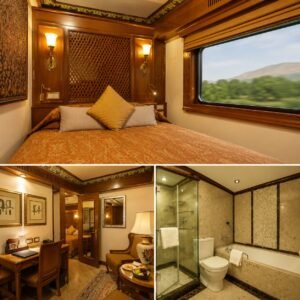
Stepping onto the platform from the Presidential Suite, which spans an expansive 448 square feet of private luxury, you’ll feel the shift from the vibrant energy of modern India to the timeless majesty of the Mughal heartland. The journey from Delhi or Jaipur is effortless, marked by fine dining in silver-lined carriages and the sight of the sun rising over the rural landscapes. It’s during these quiet moments of anticipation that the true scale of the monument begins to take hold. The train glides toward the city that Shah Jahan chose for his eternal tribute, offering a sense of arrival that no other mode of transport can replicate.
Curated Excursions for the Discerning Traveller
The experience continues with expert-led tours of the Agra Fort and the Taj Mahal, where every intricately carved stone tells a story of sovereign ambition. Guests don’t stand in standard queues. Instead, they receive a curated perspective that explains why was the taj mahal built in agra, focusing on the strategic importance of the Yamuna River and the city’s role as a cultural crucible. These excursions are designed to peel back the layers of history with grace and authority. While the Taj Mahal represents the pinnacle of Mughal architecture, travelers seeking to explore the broader tapestry of Rajput heritage can also discover the commanding presence of Mehrangarh Fort Jodhpur, which rises majestically above the blue city as a testament to Rajput resilience and artistic sophistication.
-
Guided walks through the red sandstone ramparts of Agra Fort.
-
Exclusive access to historical narratives provided by seasoned scholars.
-
Champagne breakfasts overlooking the ivory dome (subject to specific itinerary highlights).
To witness this wonder with the dignity and exclusivity it deserves, explore the Treasures of India itinerary and secure your place for a 2026 departure. It’s time to claim your seat on a sovereign rite of passage that defines the pinnacle of Indian hospitality.
Claim Your Seat Amidst the Splendour of the Mughal Legacy
The profound mystery of why was the taj mahal built in agra is solved through the city’s role as the Mughal capital and its vital access to the Yamuna River. This strategic waterway facilitated the transport of heavy materials while the city’s established infrastructure supported monumental construction. By choosing Agra, Emperor Shah Jahan ensured his monument of love remained at the geopolitical heart of his empire, anchored within the administrative center of the 17th century. It’s a legacy that continues to captivate the world’s imagination today.
Experience this ivory wonder with the sophistication it deserves aboard the Maharajas’ Express. A seven-time winner of the "World’s Leading Luxury Train" at the World Travel Awards, our service offers more than transit; it’s a sovereign rite of passage. You’ll enjoy exclusive off-train excursions to UNESCO World Heritage sites and bespoke hospitality that honors the "Atithi Devo Bhava" philosophy. Every detail reflects the opulence of Indian royalty, ensuring your visit is as legendary as the monument itself. For those seeking to explore beyond the Mughal legacy, the journey can extend to witness the formidable Mehrangarh Fort Jodhpur, where Rajput architectural mastery commands the horizon with equal authority.
Begin your sovereign journey to the Taj Mahal at www.maharajaexpress.com
India’s royal past awaits your arrival.
Frequently Asked Questions
Why was the Taj Mahal built specifically in Agra and not Delhi?
Agra served as the imperial capital of the Mughal Empire during Shah Jahan’s reign from 1628 to 1658, providing a prestigious and strategic setting for his grandest architectural vision. The city’s proximity to the sacred Yamuna River allowed for the transport of heavy Makrana marble and ensured a constant water supply for the lush Charbagh gardens. When historians analyze why was the taj mahal built in agra, they point to its established status as the heart of Mughal culture during the 17th century.
Is it true that Shah Jahan planned to build a Black Taj Mahal?
There’s no archaeological evidence to support the existence of a Black Taj Mahal, a legend first documented by the French traveler Jean-Baptiste Tavernier during his travels in 1665. Modern scholars and excavations at the Mahtab Bagh site across the river suggest the dark reflection in the water likely fueled this myth. Guests aboard the Maharajas’ Express can explore these moonlit gardens to witness how the ivory monument’s reflection creates a spectral beauty that transcends historical fables.
How long did it take to build the Taj Mahal in the 17th century?
The construction of this ivory-white masterpiece spanned 22 years, commencing in 1631 and reaching completion in 1653. It required the dedicated labor of 20,000 artisans and craftsmen from across India, Persia, and the Ottoman Empire to perfect every intricate inlay. This monumental undertaking cost approximately 32 million rupees at the time, an investment that secured the Taj Mahal’s position as a timeless jewel of the Indian subcontinent and a testament to Mughal power.
Can you see the Taj Mahal from the Maharajas’ Express train?
While the train doesn’t pass directly in front of the monument, guests on the Maharajas’ Express enjoy a seamless, chauffeured transition from the station to the Taj Mahal’s gates. This bespoke excursion is a highlight of several itineraries found at www.maharajaexpress.com, ensuring travelers experience the monument’s majesty without the typical bustle of public transit. The journey provides a sovereign perspective on Agra’s heritage, blending the comfort of the world’s leading luxury train with world-class guided tours.
Who was the primary architect responsible for the Taj Mahal’s design?
Ustad Ahmad Lahori is widely recognized as the chief architect of the Taj Mahal, leading a prestigious board of designers under Shah Jahan’s direct supervision. His mastery of Mughal architecture combined elements of Persian and Indian styles to create a perfectly symmetrical structure that has fascinated the world for 371 years. This architectural harmony reflects the refined tastes of the Mughal court, a standard of elegance that we strive to emulate for every guest who boards our regal carriages.
What is the best time of day to visit the Taj Mahal for photography?
Sunrise offers the most ethereal lighting for photography, as the first rays of dawn cast a soft, golden glow upon the translucent Makrana marble. The cool morning air and the relative quiet of the 6:00 AM opening hour allow for unobstructed views of the monument’s reflection in the central pool. Photographers often find that the shifting colors of the marble, from pale pink at dawn to brilliant white at noon, provide a diverse palette for capturing the soul of North India.
Are there any other Mughal monuments in Agra worth visiting?
Agra Fort, a UNESCO World Heritage site since 1983, and the Tomb of Itmad-ud-Daulah, often called the "Baby Taj," are essential stops for any discerning traveler. The red sandstone ramparts of the fort housed the Mughal emperors for generations, while the delicate marble lattice work of the tomb showcases the evolution of Mughal aesthetics. These sites represent the architectural zenith of the 16th and 17th centuries, offering a comprehensive narrative of India’s royal past that complements the grandeur of the Taj Mahal.
How much does it cost to visit the Taj Mahal on a luxury tour in 2026?
For the 2026 season, a sovereign journey through North India on the Maharajas’ Express begins at approximately $4,800 per person for a four-day itinerary. This all-inclusive price covers your stay in palatial cabins, gourmet dining, and curated excursions to the Taj Mahal with expert guides and private transport. You’ll find detailed pricing and seasonal schedules for these world-class rail adventures by visiting www.maharajaexpress.com to plan your next graceful sojourn through the heart of the subcontinent.







 1-855-952-6526 (Toll-free)
  +44 1753 201 201
  61-2-86078986
  + 44 ( 0 ) 7739 716978