
What if the true measure of a kingdom’s prestige isn’t found in its gilded thrones, but in the haunting shade of indigo that has coated its ancient stone walls for over 500 years? You likely yearn for the timeless allure of Rajasthan. Yet, the thought of navigating the dense, bustling crowds of the old quarters often feels more like a chore than a sovereign rite of passage. In this regal sojourn, we invite you to discover the majestic history and sapphire-hued architecture of Jodhpur, India’s Blue City, through a lens of unparalleled luxury that prioritizes your comfort and exclusivity.
You’ll gain an intimate understanding of the Brahmin traditions and the scientific cooling theories behind the city’s iconic paint while identifying the most prestigious landmarks that remain hidden from the average tourist. We’ll also reveal how to plan a sophisticated arrival via The World’s Leading Luxury Train at www.maharajaexpress.com , ensuring your graceful sojourn through North India is as magnificent as the destination itself. It’s a journey of dignity. This guide serves as your curated roadmap to experiencing the heart of the Marwar region with the grace that only a true connoisseur of heritage can appreciate.
Key Takeaways
Unveil the fascinating sociocultural history and divine Brahmin theories that explain the mesmerizing indigo hues of India’s blue city, where every sapphire-washed alleyway echoes with tales of a glorious past.
Behold the imposing grandeur of Mehrangarh Fort and the serene marble elegance of Jaswant Thada to truly appreciate the architectural prowess and royal legacy of the Marwar region.
Explore a world of unparalleled opulence at the Umaid Bhawan Palace, a masterpiece of Art Deco and Rajput design that stands as a testament to the enduring splendor of Indian royalty.
Navigate the vibrant sensory landscape of the Old City’s markets and the historic Brahmapuri district to discover the authentic cultural soul hidden within the sapphire labyrinth.
Discover how to embark on this regal sojourn with the sophisticated grace of the Maharajas’ Express, the world’s leading luxury train, by visiting www.maharajaexpress.com to explore the “Indian Splendour” itinerary.
Table of Contents
The Architectural Grandeur of Mehrangarh: A Citadel Above the Blue
Navigating the Sapphire Labyrinth: A Connoisseur’s Guide to the Old City
A Graceful Arrival: Discovering Jodhpur Aboard the Maharajas’ Express
The Enigma of the Azure: Why Jodhpur is India’s Blue City
Nestled at the edge of the Thar Desert, the city of Jodhpur emerges as a sapphire mirage, a testament to the vision of Rao Jodha who established this formidable citadel in 1459. While Jaipur, the famed Pink City founded later in 1727, reflects the warm terracotta glow of a desert sunset, India’s blue city offers a cooler, more celestial aesthetic that has captivated travelers for centuries. For those arriving via the Maharajas’ Express, the first glimpse of these azure dwellings huddled beneath the Mehrangarh Fort represents an invitation to explore a living museum of Rajasthani heritage. This monochromatic landscape isn’t merely a stylistic choice; it’s a profound intersection of history, sociology, and survival in one of the world’s most arid regions.
The Legend of the Brahmin Blue
The origins of this monochromatic marvel trace back to the historic Brahmapuri district, where the scholarly Brahmin community first painted their homes in shades of indigo. This distinct pigment served as a visible marker of their high social status and their devotion to Lord Shiva, whose skin is often depicted in similar divine hues. Over time, this practice of expressing spiritual purity through architecture transcended caste boundaries, eventually transforming the entire urban landscape into a unified sea of cobalt. Today, India’s blue city maintains this tradition as a badge of local pride, ensuring that the regal legacy of the Marwar region remains preserved for every discerning guest who seeks the extraordinary.
Indigo and the Architecture of the Thar Desert
Beyond its aesthetic splendor, the choice of azure serves a vital function in the harsh climate of North India, where summer temperatures frequently exceed 45 degrees Celsius. The traditional wash is a sophisticated mixture of lime and copper sulphate, a combination that reflects sunlight while simultaneously acting as a potent repellent against termites that often plague desert structures. Residents find that these treated walls effectively lower indoor temperatures by several degrees, providing a natural sanctuary against the relentless sun. Jodhpur Blue is the exquisite culmination of ancient thermal engineering and a profound reverence for ancestral tradition.
Year of Founding: 1459 by Rao Jodha
Primary Pigments: Indigo, Copper Sulphate, and Lime
Regional Contrast: Jodhpur (Blue) vs. Jaipur (Pink, est. 1727)
Functional Benefits: Heat reflection and pest control
The experience of walking through these narrow, winding alleys is akin to a sovereign rite of passage, where every corner reveals a new shade of lapis or periwinkle. It’s a journey that perfectly complements the opulence of a luxury rail voyage, offering a rare glimpse into a world where beauty and utility exist in perfect, regal harmony.
The Architectural Grandeur of Mehrangarh: A Citadel Above the Blue
Rising with an almost supernatural defiance from a sheer rocky precipice, Mehrangarh Fort stands as one of the most formidable and imposing citadels in the Indian subcontinent. Founded in 1459 by Rao Jodha, this architectural behemoth serves as the crown jewel of Jodhpur, guarding the desert horizon with its massive sandstone walls. As travelers gaze from the high ramparts, the breathtaking vista of India’s blue city unfolds in a rhythmic tapestry of indigo and cerulean. This sapphire sprawl, once a marker of Brahmin status and a clever method for repelling heat, now exists as a living museum. Under the meticulous stewardship of the Mehrangarh Museum Trust, established in 1972, the fort remains a pristine testament to Marwar heritage, preserving its delicate stone lattices and expansive courtyards for generations of global voyagers.
A Fortress That Defies Time
The ascent to the summit requires passage through seven massive gates, each a silent witness to centuries of siege and celebration. Jayapol, the Gate of Victory, was commissioned by Maharaja Man Singh in 1806 to commemorate his triumphs over the armies of Jaipur and Bikaner. Nearby, the Fatehpol stands as a monument to the defeat of the Mughals in 1707. At the Loha Pol, guests encounter the somber Handprints of Sati, fifteen small palm imprints that memorialize the royal widows who committed self-immolation in 1843. Perched 125 meters above the city skyline, the fort offers a perspective of regal authority that few other landmarks can match. It is a place where history feels tangible, etched into every grain of the scorched yellow stone.
The Opulent Interiors of the Rajput Kings
Beyond the rugged exterior lie chambers of unimaginable beauty, where the harsh desert sun is transformed into a kaleidoscope of color. The Moti Mahal, or Pearl Palace, features a ceiling adorned with genuine gold leaf and five hidden alcoves where the queens once listened to court proceedings in privacy. In the Phool Mahal, the “Flower Palace,” Maharaja Abhaya Singh created a sanctuary of stained glass and vibrant paintings that evoke a permanent spring. The Sheesh Mahal further elevates this sensory journey, utilizing thousands of convex mirrors to reflect the flickering light of oil lamps, creating a celestial atmosphere that mirrors the starry Rajasthan nights. To experience this majestic heritage as part of a curated royal itinerary, many discerning travelers choose the bespoke excursions offered by The Indian Splendour journey.
Founded: 1459 by Rao Jodha
Elevation: 125 meters above the Jodhpur skyline
Key Feature: The Mehrangarh Museum Trust preservation efforts
Visual Highlight: Panoramic views of india’s blue city from the ramparts

Beyond the Blue Walls: Exploring Jodhpur’s Royal Landmarks
The journey through India’s blue city extends far beyond the indigo-washed facades of the old quarter. To truly grasp the spirit of Marwar, one must witness the architectural triumphs that reflect the absolute power and refined taste of the Rathore dynasty. These landmarks aren’t mere relics; they’re the living pulse of a royal legacy that continues to enchant guests aboard the Maharajas’ Express. The transition from the narrow, azure alleys to the sprawling estates of the kings marks a shift into a world of curated opulence.
Umaid Bhawan: A Living Palace
Construction on this golden-hued masterpiece began in 1928, commissioned by Maharaja Umaid Singh as a famine-relief project to provide employment for over 3,000 local artisans during a period of severe drought. Crafted from interlocking Chittar sandstone without the use of mortar, the palace stands as a pinnacle of Art Deco symmetry blended with Rajput grandeur. It’s a rare privilege to walk these halls, as the current Maharaja, Gaj Singh II, and the royal family still reside in a private wing. With 347 rooms and a vast museum, it remains one of the largest private residences ever built, symbolizing a king’s dedication to his people’s survival.
Jaswant Thada: The Marble Poetry
A short distance from the towering fort lies the Jaswant Thada, a cenotaph built in 1899 to honor Maharaja Jaswant Singh II. It’s often called the ‘Taj Mahal of Marwar’ due to its ethereal construction from polished sheets of Makrana marble. These translucent stones are so thin that they emit a warm, golden glow when hit by the desert sun, creating a spiritual atmosphere. The site features intricately carved gazebos and a tiered garden overlooking a quiet lake, offering a serene contrast to the bustling markets of India’s blue city. Those seeking to explore more of Rajasthan’s regal heritage can find detailed itineraries on our destinations page.
The Ancient Echoes of Mandore
Before Rao Jodha founded the current city in 1459, Mandore served as the capital of the Marwar kingdom for over 600 years. Today, the Mandore Gardens house the high-reaching dewals of former rulers, built in the style of Hindu temples rather than traditional chhatris. These dark red sandstone monuments rise amidst lush greenery, offering a silent chronicle of a thousand years of sovereignty. Every stone here tells a story of the Maharajas’ enduring influence on the landscape of North India. Visit www.maharajaexpress.com to begin your own regal narrative through these historic plains.
Navigating the Sapphire Labyrinth: A Connoisseur’s Guide to the Old City
To truly grasp the soul of India’s blue city, one must venture beyond the ramparts of Mehrangarh and descend into the sapphire-hued labyrinth of Brahmapuri. These narrow, winding alleys offer an intimate tableau of local life, where the cerulean walls provide a cooling sanctuary against the Thar Desert’s intensity. As you traverse these historic pathways, it’s essential to remember that these vibrant structures are cherished family residences. A respectful nod or a soft greeting in the local tongue often opens doors to genuine hospitality; however, one should always seek permission before capturing the private dignity of a home’s interior on camera. This mindful approach ensures your visit remains a graceful exchange of cultures rather than a mere intrusion.
The Sensory Splendor of Sadar Bazaar
The rhythmic pulse of Jodhpur emanates from the Ghanta Ghar, a majestic clock tower constructed by Maharaja Sardar Singh between 1880 and 1911. Surrounding this landmark, the Sadar Bazaar unfolds in a kaleidoscope of sensory delights. The air is heavy with the piquancy of Rajasthani chilies and the sweetness of local mawa kachori. You’ll find a curated selection of regional treasures, including:
Jodhpur Breeches: Originally designed for polo enthusiasts in 1890, these garments remain a symbol of equestrian elegance.
Bandhani Textiles: Intricate tie-dye fabrics that shimmer with vibrant desert hues.
Handcrafted Leather: Exquisite mojris and bags fashioned from camel hide, representing centuries of artisanal legacy.
The Clock Tower remains the rhythmic heart of the city’s commerce, its chimes marking the passage of time for generations of merchants who have traded here for over a century.
Hidden Gems: The Ancient Stepwells
Among the most bespoke experiences within India’s blue city is a visit to Toorji Ka Jhalra, a stunning 18th-century stepwell that lay submerged for decades before its meticulous 2017 restoration. This architectural marvel features intricate carvings of dancing elephants and medieval lions, descending deep into the earth to create a refreshing micro-climate. These subterranean structures were designed to be significantly cooler than the street level, offering a quiet respite from the midday sun. For the most evocative photography, visit during the early morning hours when the rising sun casts golden light upon the sandstone, creating a breathtaking contrast against the deep azure reflections in the still water.
Experience the timeless grandeur of Rajasthan’s heritage by embarking on The Indian Splendour journey, where every destination is a chapter in a royal chronicle.
A Graceful Arrival: Discovering Jodhpur Aboard the Maharajas’ Express
To truly grasp the majestic spirit of India’s blue city, one must arrive with the dignity that such a destination demands. The Maharajas’ Express, recognized as the World’s Leading Luxury Train for seven consecutive years, offers a passage that is as legendary as the Thar Desert itself. Through the The Indian Splendour itinerary, guests embark on a six-night journey that weaves through the golden sands of Rajasthan, positioning Jodhpur as a crown jewel of the experience. It’s not merely a rail trip; it’s a curated odyssey where the transition from the vibrant landscapes of North India to the azure horizons of Jodhpur happens with effortless poise. You can begin orchestrating your own royal narrative by visiting www.maharajaexpress.com to secure your cabin for the 2026 season.
The Sovereign Experience on Wheels
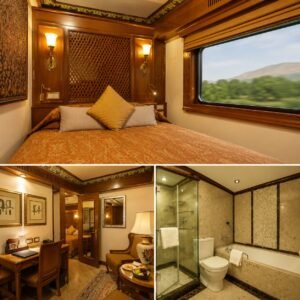
Life aboard this locomotive marvel mirrors the grand lifestyles of India’s erstwhile rulers. The Presidential Suite, a vast expanse of 448 square feet, serves as a private palace that glides across the tracks. Every detail, from the rich silk upholstery to the bespoke wood carvings, evokes a sense of timelessness. Guests dine in two themed restaurants, Mayur Mahal and Rang Mahal, where world-class chefs serve gourmet delicacies on fine Limoges plates. This environment ensures that the journey between India’s historic capitals is as enriching as the destinations themselves. It’s a sanctuary where modern sophistication meets the soul of ancient hospitality, providing a seamless retreat after a day of desert exploration.
Curated Excursions in the Blue City
The Maharajas’ Express elevates the exploration of India’s blue city through exclusive off-train experiences that standard tours cannot replicate. Guests are whisked away for private walking tours through the labyrinthine Old City, followed by a regal cocktail evening or a lavish dinner at a venue overlooking the illuminated Mehrangarh Fort. These moments are designed to provide an intimate connection with Jodhpur’s heritage without the intrusion of the modern world. After immersing yourself in the local culture, the convenience of returning to your opulent cabin provides a welcome contrast. You can review the upcoming departure dates to plan your visit to this sapphire sanctuary during the cooler months of the 2026 travel calendar.
Step Into a Legacy of Azure Splendor
Jodhpur remains a timeless sanctuary where the indigo-washed streets and the formidable Mehrangarh Fort offer a profound glimpse into a world of chivalry and architectural brilliance. You’ve journeyed through the sapphire labyrinth of the old city and witnessed how the desert light dances upon the cobalt walls of India’s blue city. Such a majestic heritage demands a mode of travel that’s equally legendary, ensuring your passage across the Thar Desert is as storied as the landmarks themselves.
The Maharajas’ Express, honored as the World’s Leading Luxury Train for 7 consecutive years, transforms this exploration into a truly sovereign odyssey. You’ll indulge in exclusive royal off-train excursions that provide intimate access to Rajasthan’s hidden treasures, all while experiencing the grace of impeccable 24/7 butler service. It’s a journey where every detail is curated for your ultimate comfort, blending the nostalgia of a bygone era with world-class sophistication. Your grand adventure across the sands of time awaits.
Begin Your Sovereign Journey to the Blue City with Maharajas’ Express
Frequently Asked Questions
Why is Jodhpur called the Blue City?
Jodhpur earned its moniker as India’s blue city because the Brahmin community originally painted their dwellings with indigo to signify their high social status. This tradition dates back over 500 years, and the copper sulphate mixed into the lime wash effectively repels termites while keeping interiors 5 degrees cooler. As you gaze from the fort, you’ll see thousands of these azure structures creating a sapphire tapestry that defines the city’s regal and historic identity.
Is Jodhpur’s blue color disappearing?
While modern construction has introduced grey concrete, approximately 65 percent of the historic Brahmapuri district still retains its iconic indigo wash to preserve its heritage. Local regulations enacted in 2018 encourage residents to maintain these traditional colors to protect the city’s visual legacy. Guests aboard the Maharajas’ Express will find that the most celebrated vistas from Mehrangarh Fort still offer a breathtaking sea of blue that stretches toward the horizon.
What is the best time of year to visit Jodhpur in 2026?
The most exquisite period to visit Jodhpur in 2026 is between October and March when temperatures range from a pleasant 10 to 25 degrees Celsius. These cooler months provide the perfect climate for a majestic sojourn across the Thar Desert’s golden landscapes. You’ll avoid the heavy monsoon rains of July and the intense May heat that often exceeds 42 degrees, ensuring your royal exploration of the city remains comfortable and elegant.
How many days should I spend in the Blue City?
A stay of 2 to 3 days allows you to fully immerse yourself in the aristocratic splendors of india’s blue city. This duration provides ample time to explore the 15th-century Mehrangarh Fort, wander through the Clock Tower markets, and enjoy a bespoke sunset dinner. For those seeking a curated experience, the Maharajas’ Express offers itineraries that distill these highlights into a perfectly paced day of discovery, blending ancient traditions with world-class luxury.
Can I visit Jodhpur via the Maharajas’ Express?
You can certainly experience the majesty of Jodhpur through the “The Heritage of India” and “The Indian Splendour” itineraries curated by the Maharajas’ Express. This world-class luxury train provides a sovereign rite of passage across North India, combining heritage with modern sophistication. To reserve your suite for a 2026 departure and view the 6-night schedules, please visit the official website at www.maharajaexpress.com to begin your journey into a world of unparalleled opulence.
What should I wear when exploring the Old City of Jodhpur?
It’s best to wear breathable linen or cotton clothing and sturdy walking shoes to navigate the steep, winding alleyways of the historic districts. Since you’ll likely visit active temples or the Jaswant Thada cenotaph, carry a light silk scarf to cover your shoulders as a mark of respect. These practical choices don’t compromise your elegance, allowing you to move with grace while exploring the 500-year-old architectural wonders of this desert kingdom.
Is Mehrangarh Fort accessible for all travelers?
Mehrangarh Fort provides accessibility through a modern elevator system that transports guests 400 feet up from the main entrance to the palace apartments. While the cobblestone paths of the Old City present challenges for some, the fort’s primary museum galleries and courtyards are reachable for most travelers. The Maharajas’ Express ensures its guests receive personalized assistance, making this 1459-built citadel accessible for every traveler seeking to witness its legendary grandeur and timeless beauty.
What are the must-try local dishes in Jodhpur?
You must savor the Pyaaz Kachori, a spicy onion-filled pastry, and the indulgent Mawa Kachori, which originated at the local Rawat Mishthan Bhandar. These delicacies represent the culinary opulence of Rajasthan, often served alongside the fiery Mirchi Bada. When dining in the regal atmosphere of the Maharajas’ Express, you’ll encounter these traditional flavors prepared with world-class sophistication, offering a gourmet tribute to the vibrant and storied heritage of the Marwar region.






 1-855-952-6526 (Toll-free)
  +44 1753 201 201
  61-2-86078986
  + 44 ( 0 ) 7739 716978